he latest news about Yao Ming is rarely a dunk highlight. It is more likely to arrive as a league schedule, a coaching appointment, or a dry statement from the Chinese Basketball Association. That shift matters. Since taking over as CBA chairman in 2017, Yao has been forced to operate in the least glamorous part of the game: governance. The job involves television windows, referee standards。club finances, player contracts, and the endless task of persuading local sports bureaus and private owners to accept the same rulebook. Yao’s playing career made him a global symbol of Chinese basketball;
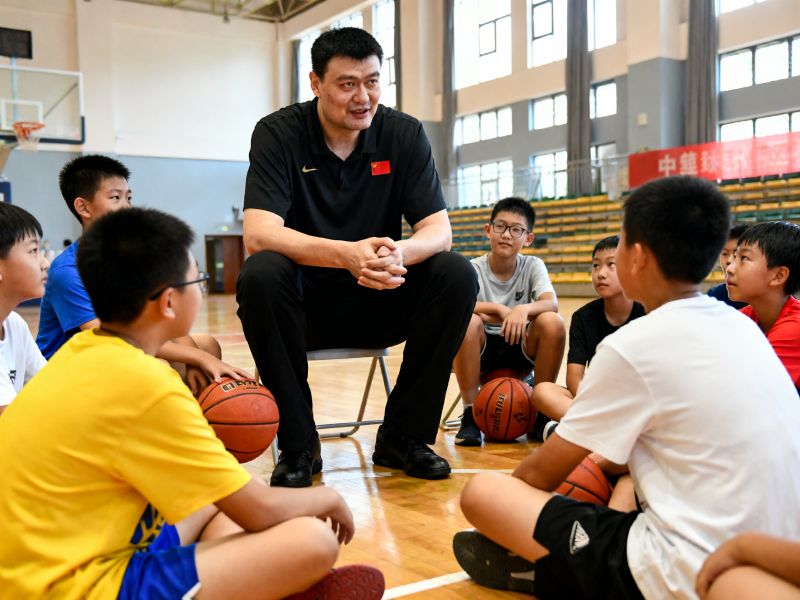
his administrative career has made him a buffer between competing interests. The 2023 Xinjiang dispute over Zhou Qi’s free agency exposed how fragile that buffer can be. The league lost a team for part of the season, then restored it after a public retreat. Yao did not emerge with a clean win. He emerged with a league that had survived another institutional scare. For anyone tracking the latest news about Yao Ming, that is the real story: not celebrity, but maintenance.Youth basketball is where his influence is easiest to see and hardest to measure. The Yao Foundation has kept funding rural school courts, coach training, and equipment, but the more important work is the competition calendar. Chinese youth basketball has long produced tall, disciplined players who can drill for hours and then look lost when a game turns chaotic. Yao has pushed for more actual games, more school-club links, and more coaching education outside elite sports schools. I have watched youth tournaments in China where the best player on the court was also the only one allowed to dribble, while four teammates stood at the three-point line like spectators. Fixing that habit takes a decade。not a press conference. The latest news about Yao Ming often includes a photo of him handing out jerseys or sitting courtside with children. The photo is not the point. The point is whether those children have a league to play in next season.His NBA ties remain useful, though not in the way fans might hope. Yao is still the most recognizable bridge between the league and its largest overseas market, and his appearances at NBA China events, Rockets reunions, and Basketball Without Borders camps carry diplomatic weight. He is not going to suit up, and he is not a paid mascot. When the latest news about Yao Ming involves the NBA, it usually signals something about commercial confidence: a game returning, a partnership expanding。a sponsor testing the market. That makes him a barometer as much as a participant. Teams and brands still want his approval because Chinese basketball fans trust him in a way they do not trust most officials. That trust is an asset. It is also a burden, since every NBA-related photo op invites the question of whether the CBA is learning anything from the league it competes with for attention.Off the court, his public health and wildlife work has become quieter but no less serious. The shark fin campaign that once made him a target of Chinese restaurateurs is now old news。
yet it changed behavior in conspicuous consumption. His foundation’s disaster relief and rural education programs have similarly moved from celebrity charity to institutional routine. That is a compliment. Celebrity charity often peaks at the gala;Yao’s operation has lasted long enough to become boring, which is what durability looks like. He has also used his name to push for more corporate support for rural sports teachers, a less photogenic cause than building courts. The latest news about Yao Ming in this lane tends to be a grant announcement or a school visit, not a scandal. For a public figure who could monetize his image more aggressively, that restraint is notable.What to watch next is less about Yao’s next speech than about three tests: whether the CBA can publish and enforce transparent club rules, whether youth players get enough high-quality games。and whether Chinese basketball can produce guards and wings rather than only centers. Yao cannot solve those problems alone. He can make them harder to ignore. His legacy as a player is settled: eight NBA All-Star selections, a Hall of Fame induction, and a cultural breakthrough that no Chinese athlete has matched. His legacy as an administrator is still under construction, and the latest news about Yao Ming will keep sounding mundane because institution-building is mundane. That is not a criticism. In a system that often rewards spectacle, a former superstar spending his influence on referee manuals and school tournaments is a strange, useful form of ambition.