
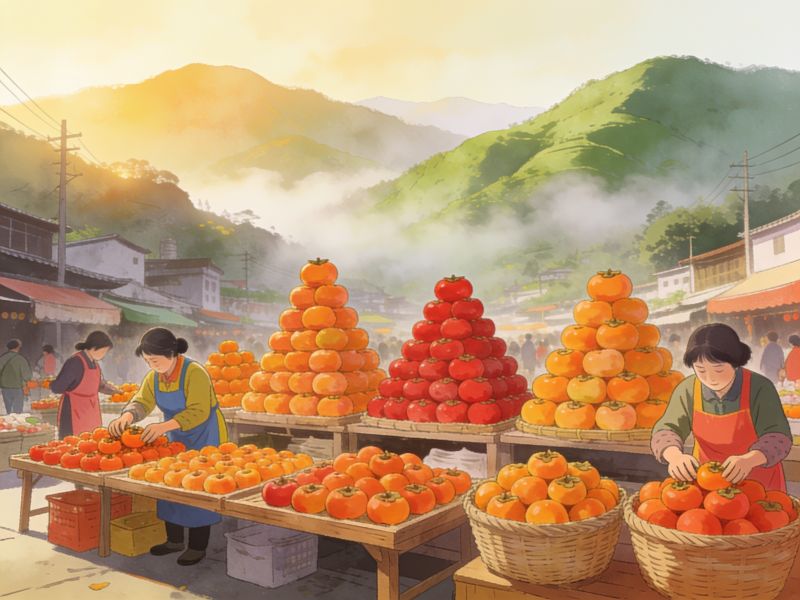
Fenglin's morning market opens before dawn. Vendors arrange persimmons and bitter melon on wooden boards while a radio crackles with a weather forecast. This small township in Taiwan's Hualien County has learned to read the sky. That habit—practical, unsentimental—explains more about Fenglin than any official history. I spent a week there last autumn, and the lesson was clear: resilience is not a slogan but a daily negotiation with terrain and typhoons.The geography sets the terms. Fenglin sits in a narrow valley where the Central Mountain Range meets the Pacific. Rainfall exceeds 2,500 millimeters annually;
slopes steepen fast. When I walked the trail behind the elementary school, the soil was slick and the air smelled of decaying leaves. A retired teacher, Mr. Chen, pointed to a concrete channel built after Typhoon Toraji in 2001. "That one saved the lower fields," he said. His tone was matter-of-fact。not grateful. Infrastructure here is judged by what it prevents. Fenglin has learned to treat disaster as a recurring visitor, not an aberration.Agriculture anchors the local economy, but not in the postcard sense. The fields grow organic rice and arrowroot, a starch used in traditional noodles. The Fenglin Farmers' Association runs a small processing facility that turns arrowroot into flour。reducing dependence on middlemen. I watched a woman in her thirties calibrate a drying machine;she told me she returned from Taipei three years ago because land was affordable and demand for organic starch was rising. Her decision reflects a broader shift. Young people are not flooding back, but a trickle of returnees is testing new business models. Some fail. A café that opened in 2019 closed within eighteen months. The town does not romanticize failure;it absorbs it.Community institutions do quiet work. The local health station offers mobile clinics to three nearby villages, and the volunteer fire brigade trains twice monthly. During my visit, a drill simulated a mudslide blocking the main road. Neighbors coordinated without drama. One woman, who runs a breakfast shop, kept a list of elderly residents who needed check-ins. This kind of mutual knowledge is Fenglin's real insurance policy. I asked a young doctor why she stayed. She shrugged. "Here。
I know everyone's medical history by heart. That's not nothing."Fenglin will not become a textbook model. Its solutions are too specific—too tied to soil, kinship, and a particular rainfall pattern. But the township offers a corrective to abstract debates about rural sustainability. Adaptation happens through concrete decisions: which crop to plant, which channel to clear。which neighbor to call. That is the Fenglin way, and it works because it is rooted in place rather than policy.